
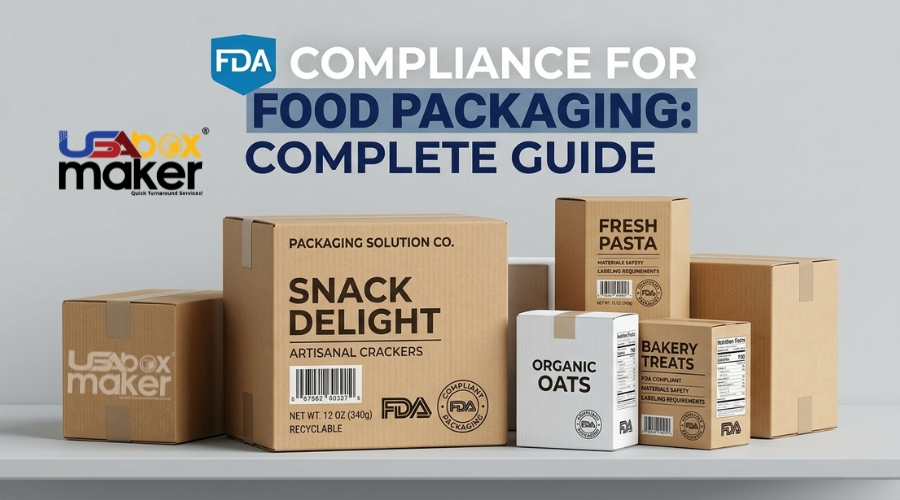
The packaging directly influences food safety, food quality, and food shelf life. It is more than just a coating. It is part of the food supply chain and is regulated. Any matter coming in contact with food may be a source of contamination, taste alteration, or a source of chemicals if not controlled. Packaging boxes safety in the United States is an ongoing demand of FDA compliance.
Food Contact Substances are regulated by the U.S. Food and Drug Administration (FDA). It ensures the safety for intended use. This includes plastics, paper, coatings, adhesives, inks, glass, and metals. Before products are available on the market, the businesses have to fulfill the rules. It minimizes risk and increases trust.
What Is FDA Compliance for Food Packaging?
To be FDA compliant, adhere to U.S. FDA regulations governing food contact materials. It guarantees that the packaging material will not emit harmful materials into food.
For instance, a plastic container is safe to store dry food items such as biscuits. It may not be suitable for hot or oily foods such as curry or sauces. Chemical transfer can rise with heat and fat. Packaging should be suitable for the kind of food and for its uses.
Why FDA Compliance Matters
Compliance with the FDA is not only a legal obligation. It affects food safety, the trust in brands, and business development. It minimizes the transfer of chemicals in storage and application.
Protects Consumer Health
In some cases, these packages may be adding minute amounts of materials to food. These limits are controlled by FDA guidelines to ensure that exposure is safe. This helps to minimize contamination risk. It can help avert health problems associated with unsafe packaging materials.
Avoids Legal and Business Risks
Food businesses must comply with FDA requirements to be in business within the U.S. Failure to comply with the requirements will result in product recalls, fines, or warning notices. It can also create issues with brand reputation and hamper business operations.
Builds Strong Consumer Trust
Food safety is a concern today. Packaging that meets the criteria indicates a commitment to quality on the part of the brand. This will increase their confidence and will improve the chances of them selecting and returning to the product.
Helps Enter Retail Markets
Large retailers and distributors often ask for compliance proof before listing a product. FDA-compliant packaging makes this process easier. It improves the chances of entering bigger markets. It also helps access supply chains more easily.
FDA Requirements for Food Packaging Materials
Some manufacturers may require proof of compliance before they will place their product on sale or transmit it to a large retailer or distributor. It evaluates materials used in packaging. It ensures they are safe under real conditions of use.
- Food Contact Substances
FDA evaluates food contact materials to ensure they are safe under intended use conditions.
- Safety Standard: Reasonable Certainty of No Harm
The FDA standard for ensuring that packaging materials release no harmful chemicals into food under “normal” use conditions. Safety is not inherent in lab testing only, but also in real usage.
- Migration Testing Requirement
Chemical migration of packaging materials should be tested. This test is for the transfer of substances from packaging to food. The use of food simulants such as water, oil, or alcohol represents a method of simulating various conditions and food types in a test.
- Material Specific Requirements
Chemical migration and food type/temperature will be matched by plastics. Paper and paperboard avoid unsafe materials. Metal needs linings. Glass is stable, but seals must meet safety rules. There is no adhesion, inks, or coatings that can cause indirect contamination of food.
- Manufacturing and GMP Rules
Packaging should be manufactured in compliance with good manufacturing practices. This also means clean production conditions and controlled additives, with no impurities. Only the minimum required amount of additives should be used for function and safety.
- Use Condition Consideration
FDA compliance depends on real-use conditions. Temperature, storage time, food type, and acidity or fat content all affect safety. A material safe for one use may not be safe for another.
Common FDA-Approved Packaging Materials
Under proper conditions, FDA-approved packaging materials are safe for food contact. They are used to store and transport food to prevent the food from being contaminated and to keep it at a good quality.
Plastics (PE, PP, PET)
Plastics are firm and pliable. PE is used in wraps, PP for containers, and PET for bottles and trays. Meeting FDA migration limits is a key ingredient to safety.
Paper and Paperboard
- Used for bakery items and dry foods. It must be free from unsafe coatings and chemical contamination risks.
- Recycled paper must be controlled for mineral oils and contamination risk.
- Many packaging applications are now limited or coming to an end for PFAS-based coatings.
Glass Packaging
Glass does not react or corrode. It is used in drinks, gravies, and canned goods. Lids and seals must also be compliant.
Metal Packaging (Aluminum and Steel)
Used in cans and foils. To avoid reactions between food and metal, protective coatings are added.
Adhesives, Inks, and Coatings
Applies to labels and multi-layered packaging. They should be safe in order to prevent an indirect migration into food.
To learn more about the packaging boxes materials, read: A Complete Guide to Food Packaging Boxes Materials.
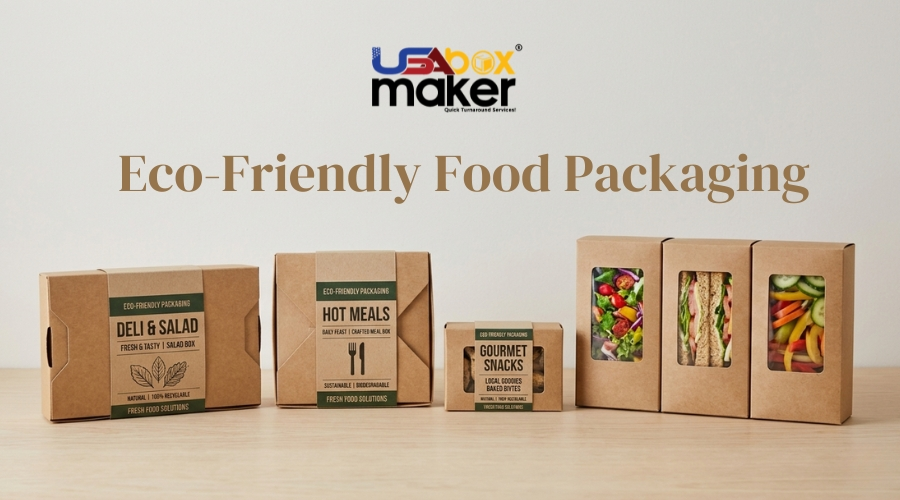
How to Ensure Your Packaging Meets FDA Standards
1. Verify Food Contact Substances (FCS)
Ensure all packaging is deemed suitable for food contact. They include plastic, paper, ink, and coatings.
2. Follow Labeling Requirements
Use clear labels with required ingredients and allergens.
3. Maintain Quality Control
Apply good manufacturing practices. GMP can exclude any contamination problems. It guarantees safety at all times.
4. Use Trusted Suppliers
Documents and test reports are to be provided by suppliers. It is not sufficient to have certificates.
For more info about the latest trends in delivery packaging, check out: Top Takeout & Delivery Packaging Trends in 2026.
Common FDA Compliance Mistakes
- Failure to use an FDA-approved food contact material that is documented.
- Not counting secondary material such as inks, adhesives, coatings, and labels.
- Failure to update supplier documents for material changes and/or process changes.
- Failure to understand the different types and conditions of food
- Failure to keep records and a lack of compliance documents during the audit
- It’s a common error to assume that all of the conditions are safe if it’s “FDA approved.” It is wrong to rely on approval without checking the use environment.
Step-by-Step FDA Compliance Checklist
Get Supplier Compliance Document:
Request the supplier to provide a Letter of Guarantee. It should show compliance with FDA guidelines. It should clearly reference the regulation that they satisfy.
Specific real use conditions:
Make sure packaging is suitable for the product being used, e.g., hot or cold, oily or acidic. Substances that are safe at low temperatures may not be safe at high temperatures.
Do Lab Testing:
Test migration with third-party, certified testing laboratories.
Follow Good Manufacturing Practices
Follow GMP and maintain traceable and auditable records.
Choosing the Right Food Packaging Supplier
- Carry FDA materials with all materials.
- Introduce Traceability and Good Quality Control.
- Know the safety requirements and conditions of use of food boxes packaging.
- Provide uniform manufacturing and hygiene procedures.
- Ensure consistent manufacturing.
- Provide support for testing and give verification reports of compliance.
Conclusion:
Compliance with the FDA is a must for every packaging company. It may be used to help ensure food safety and to protect customers. It guarantees compliance of products with the law. Completely packaging per FDA requirements provides trust and improves brand image.
Utilize accepted materials, review documents, and maintain records. Actions that reduce risk and can enhance the safety and reliability of packaging.
Good adherence is not a one-off job. It is a continuous process, which helps to ensure that the products are of good quality, safe to use, and contribute to the ongoing growth in the business. FDA compliance continues to evolve with ongoing food safety and chemical review standards.
FAQs
The FDA does not approve finished packaging. It checks if materials are safe for food contact use.
They are the maximum amounts that a substance can enter the food from the packaging.
Labels must include product information, ingredients, allergens, and nutrition facts (when applicable).
Yes. The FDA regulations apply to packaging distributed in the U.S., whether made in the U.S. or elsewhere.