
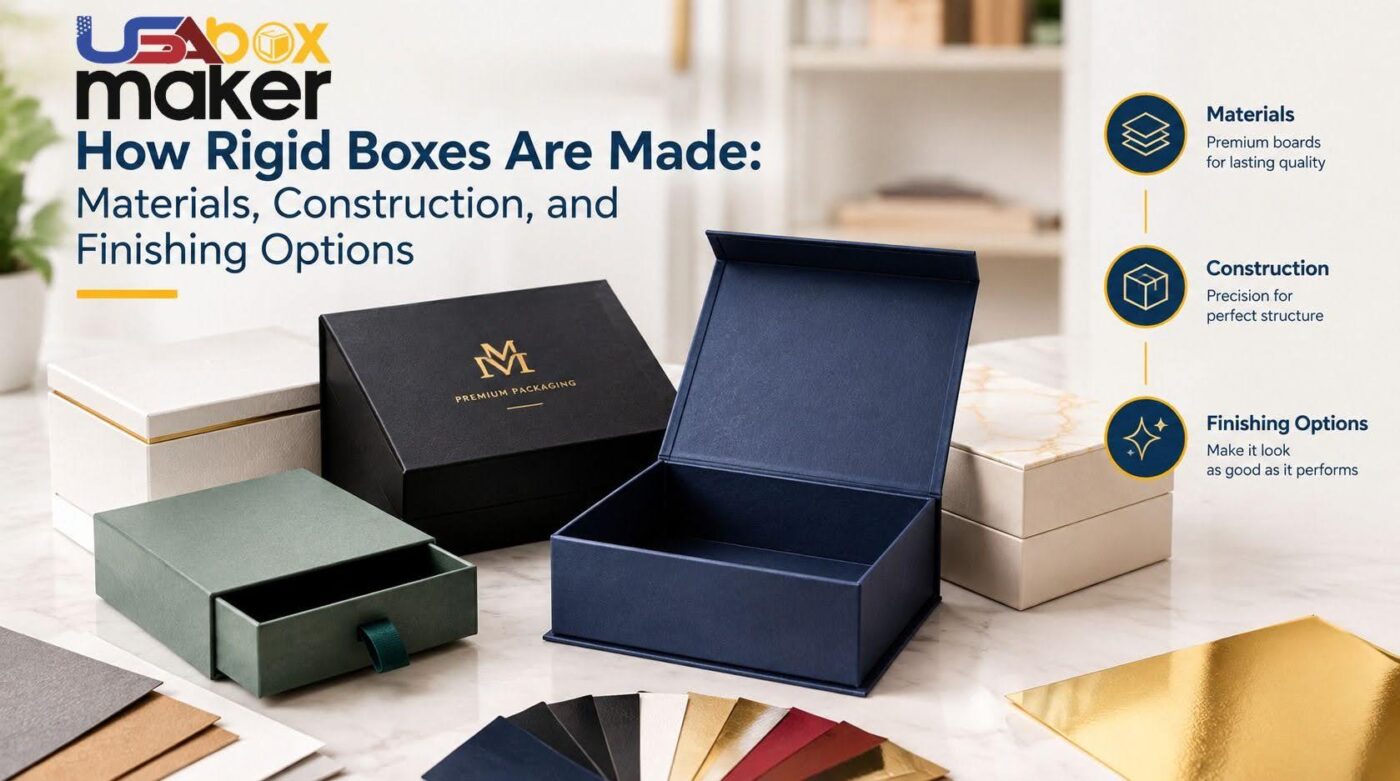
Rigid boxes are constructed using heavy paperboard to provide a strong and sturdy box. Maintains its shape throughout the storage, transporting and display period. Custom Rigid Boxes are manufactured on a product size, brand requirement and presentation. The first step is to select the material that is comparable with the product. The board is then cut and shaped to make the box. Now, the outer paper is attached, providing it a clean appearance. The details for printing and finishing are added to make up the design. All the steps contribute to making the box strong, tidy and ready to use.
What Materials Are Used to Make Rigid Boxes?
The principal materials are rigid board, wrapping paper, adhesives and the interior materials. The role that each material plays in contributing to the strength, appearance and function of the box is different.
Rigid Board and Its Role
The rigid board is used to build the box structure. The thickness will vary with the product and strength desired. Thicker boards will be needed for heavier products and less for smaller products. Appropriate thickness is a balance of strength, weight and cost.
Outer Wrapping Materials
The board is covered with an outer paper and decorated with color, designs, logos and other artwork. Coated, textured and specialty papers have various appearances and finishes. It can be determined by the product, design and budget.
Adhesives and Internal Components
The board and wrapping paper are held in place by adhesives. Inserts, trays, dividers and liners can also be used for storage to ensure products are secure and well organised.
How Are Rigid Boxes Constructed?
Rigid boxes are prepared by cutting the board, preparing the shape, applying external paper and inspecting the box. Proper size is important for a good fit!
Cutting and Preparing the Board
The rigid board’s cut panels are manufactured based on the box design. The accurate cutting will allow each panel to be accurate when assembled. Some designs feature grooves or scored areas in order to fold them or to have a clean edge.
Forming the Box Structure
The cut panels are glued together to make the box. Corners and edges are locked with the checking of the structure for proper alignment. This gives a strong base to the outer wrapping.
Wrapping and Finishing the Structure
The assembled box is covered with printed or decorative paper. The edges and corners are crumpled around to form a smooth surface. Custom Printed Rigid Boxes allow you to print logos, colors, patterns and other brand artwork on the external paper.
What Are the Main Types of Rigid Box Construction?
Two-Piece Rigid Boxes
Two piece rigid boxes are divided into two parts, a lid and a base. The lid is put on the base to seal the box. The lid, base or both of a Custom Printed Two Piece Rigid Box can be artfully designed. Provides space for logos, colors and product information.
Shoulder Neck Boxes
A Shoulder Neck Box has an inner shoulder and neck between the cover and base. This will give the effect of layers when the box is opened. It is crucial to have an accurate size since all the components should fit together properly.
Magnetic Closure Boxes
Magnetic Closure Boxes are boxes with a folding flap that is closed with hidden magnets. The magnets are installed within the structure when putting it together. This design provides a clean opening and closing experience and maintains the security of the product.
How Are Foldable and Collapsible Rigid Boxes Made?
Foldable Rigid Construction
Custom Printed Foldable Rigid Boxes are manufactured with hinged or scored portions that fold the box. This comes with a compact design which doesn’t sacrifice stability when put together. It is important to fold each of the points precisely to ensure the box opens easily without tearing the exterior paper.
Collapsible Construction
Collapsible Rigid Boxes can be folded down when not in use. This allows them to be stored and moved easily particularly in bulk orders. The box should still have a strength sufficient to ensure the protection of the product.
What Printing and Finishing Options Are Used on Rigid Boxes?
The final look is achieved through printing and finishing on rigid boxes. They can enhance the way products are displayed and enable customers to identify a brand.
Printing Options
Logos, colors, patterns, images and product information are added by printing. Artwork can be used to create a Custom Rigid Box to match a brand’s style and colors. To learn more about how to create a brand identity through packaging, read 7 Smart Ways Rigid Boxes Make Your Brand Shine.
Surface Finishes
Matte creates a low shine and gloss gives it a higher shine. Foil, Embossing, Debossing and Spot UV can highlight the key details and provide a polished look to Luxury Packaging Boxes.
Structural and Interior Finishing
The protection and organization of products are provided with trays, inserts, dividers and liners. Premium Packaging Boxes can incorporate these attributes in addition to top notch finishes to offer extra protection and presentation.
How Do Rigid Boxes Become Suitable for Different Products?
Rigid boxes are made to fit the product to be housed inside to comply with the requirements of the product’s size, weight, shape and protection level. Special inserts are required for fragile products and stronger boards for heavier products. The Rigid Gift Boxes can also feature ribbons, foil or decorative papers when presentation is important.
What Should Be Considered When Choosing Rigid Box Construction?
- The first place to look for any size or weight is at the product. The box should be filled so that there is the right amount of space and there are no gaps.
- The type of protection required varies according to the product. For fragile items, consider that they will require additional board, fitted inserts or dividers to remain safe while being handled.
- Storage and transportation are also important. A practical box should be easy to store, pack and transport without using too much space.
- The style of the packaging can have an impact on the customer experience. Standard lids are suitable for everyday products or magnetic or specialty lids can bring a more upscale appearance.
- Printing should be done to reflect the brand and product. Packaging can be more easily recognized by the use of logos, colors, patterns and product information.
- Surface finishes can be used to enhance the beauty. Different looks and textures can be achieved by using matte, gloss, foil and embossing.
- Interior inserts add security and order to products. They come in particularly handy if the products or goods are easily broken or have multiple parts.
- The final selection should be made based upon budget and production volume. For large orders, a simple structure might be more appropriate. For expensive products, a detailed design might be more appropriate.
Conclusion
Rigid boxes can seem simple but each component of the box has a purpose. The board is used to provide strength, the outer wrap to give it the look and the printing and finishing for the brand. Products are safe and well organized in inserts and trays. By choosing good materials, businesses can make Custom Packaging Solutions. These boxes can help protect products, save space and save money. They can even provide customers with a more enjoyable unboxing experience
FAQs
What is the process of making rigid boxes?
Boards are cut, glued, wrapped with paper, printed and finished. Inserts can be added if needed.
What is the difference between Rigid boxes and Folding boxes?
Rigid boxes use thick boards and keep their shape. Folding boxes use thinner paperboard and fold flat.
Are rigid boxes flexible enough to be adapted for various products?
Yes. They come in different sizes, shapes, openings, finishes, inserts and compartments.