
A customer buys a skincare serum and waits for delivery. The product is perfect, but the box arrives damaged. The first impression is already broken before the product is used.
This is where custom cosmetic packaging material matters. It ensures product safety, shipping performance, and the customer’s perception of your brand. Poor material leads to damage, returns, and lost customer trust. The right materials help to create trust and to preserve product value.
Industry studies estimate that up to 20% of beauty eCommerce returns are linked to packaging damage during transit.The material used is directly related to the cost, the satisfaction of the customer, and the performance of the brand.
Types of Materials Used for Personalized Cosmetic Boxes
Cardboard
Cardboard is commonly used in cosmetics and is lightweight and inexpensive. It is normally medium (about 12-24 pt) and will accommodate small beauty products such as lipsticks and mascara. It can be easily printed and customized which is good for retail packaging.
Paperboard
Paperboard is even smoother and slightly denser than normal cardboard. Usually, it is applied in a thickness of 14–28 pt, depending on the product requirements. Can be sharp printed. Provides a clean and luxurious look to skincare & makeup boxes.
Corrugated Board
The inner layer of corrugated board is fluted, which makes the corrugated board very strong.
Thickness:
- E-Flute (600–650 GSM)
Medium thickness. Used for outer printing and light protection.
- E-Flute (800–850 GSM)
Thicker and stronger. Used for full box printing and better protection.
Kraft Paper
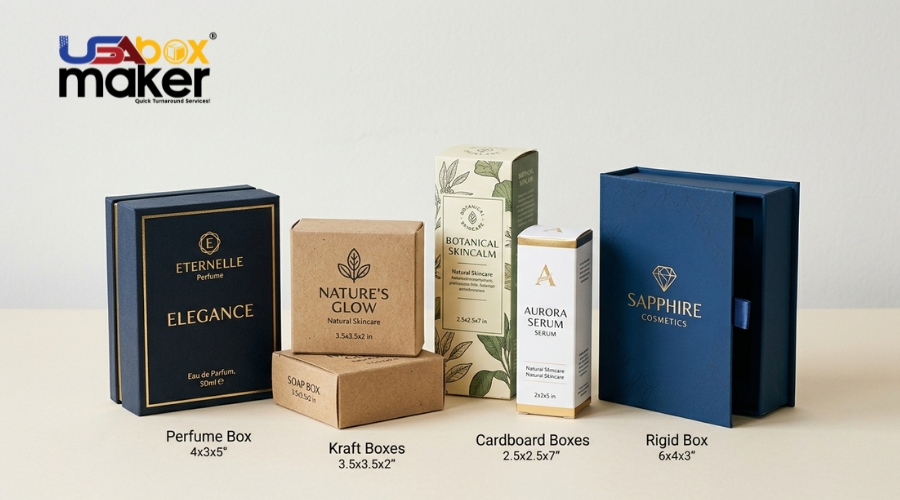
Kraft paper is a natural, recyclable, and typically medium-thickness paper. Has strength for basic protection and is easy on the eye. Many eco-friendly beauty brands opt for it.
Rigid Boxes
Rigid boxes are the thickest, with a thickness of about 800–1500 GSM or higher. They are tough and do not crack or bend. They are also used for high-end skin care, perfumes and gift packaging where appearance and durability matter.
How to Choose Custom Cosmetic Box Material Step by Step
Selection of the appropriate material is not just a design choice. It impacts product safety, consumer confidence, and brand long-term performance. A skin care company put skin care bottles in thin packing cartons. The units were pressurized during shipping, and several broke.
Switching to more durable material and adding inserts helped to decrease damage and enhance reviews. This demonstrates the direct impact of packaging material on the actual results.
Product Weight and Size
Material choice always starts with product weight and structure. Small items like lip balms, eyeliners, and mini tubes do not need heavy protection. Light packaging fits small items, heavy products need stronger boxes to avoid damage.
Simple decision guide:
- Light products use cardboard, heavy products need corrugated or rigid material.
Product Protection Requirements
Cosmetic products face pressure, vibration, and movement during shipping and storage. Protection is not optional; it is essential. Perfume bottles are a clear example. One luxury fragrance brand shipped glass perfume bottles in standard boxes without inserts. Many bottles broke in transit. They went to rigid boxes with foam inserts. Better packaging reduced damage and complaints. Similar ideas are also seen in Perfume Packaging Box Design concepts, where strong structure and protection play a key role.
Simple decision guide:
- Fragile products need inserts and stronger material.
- Non-fragile products can use standard boards.
Brand Positioning
Quality is measured by the box first. Premium or rigid finishes are used for luxury brands to convey high-end. Organic skin care brands use Kraft material to convey organic. Economy brands utilize cardboard as they have to lower the price.
Simple decision guide:
- Rigid or premium finishes are used with luxury brands.
- Organic labels are produced in Kraft or natural materials.
- Cardboard is used by budget brands because it is inexpensive to manage budgets.
Printing and Customization Needs
Printing quality can change how customers see your brand. But a good design can go astray if the material is not suitable for proper printing. Coated paperboard is used for many Custom printed Cosmetic Boxes. Retains ink for a long time and maintains the sharpness of colors. It’s suitable for skincare designs.
At one time, a make-up company packaged a substandard board in a colored pink box. The final product was lumpy and flat. A good design appearance was achieved using replacement with coated paperboard. It also looked larger and bigger and was more prominent on shelves.
Simple decision guide:
- If you are looking for great detail designs, then coated paperboard should be used.
- A simple design requires regular cardboard.
Sustainability Goals
Nowadays, Eco-friendly packaging is one of the main buying criteria. Brands are increasingly expected to reduce waste and implement more recycled content in their products, as customer demand for this increases. Eco-friendly packaging brands are those that employ kraft paper or recycled board. A body lotion company changed to Kraft boxes. Boxes were recyclable. The buyers who were eco-conscious were more interested.
Simple decision guide:
- Kraft or recycled material is the choice of eco-friendly brands.
- Premium eco brand uses high-quality, recyclable boards.
Budget Considerations
Budget affects packaging decisions, but low cost should not reduce product safety. Poor material often leads to damage and higher return costs later.
One skin care company attempted to lower costs by sending skin care products in lighter boxes. First, the costs decreased, and damaged bottles made the return rates higher. Later, they coped with the cost by switching from the cheapest board to a medium-strength board, thus maintaining the overall profit.
Simple decision guide:
- Risk can be a factor in short-term savings.
- Balanced cost is in medium-strength material.
Choosing the Right Cosmetic Box Material – Final Guide:
Packaging isn’t everything. But it’s a big part of how you manage safety, branding and the customer experience. The right one depends on the type of products, brand image, and shipping conditions. These converge, and packaging does its duty without failings.
Material Comparison Table
| Material | Cost | Print Quality | Protection | Sustainability | Best For |
| Cardboard | Low | High | Medium | Good | Lipsticks and makeup |
| Paperboard | Medium | Excellent | Medium | Good | Skincare, foundation |
| Corrugated Board | Medium | Good | High | Good | Shipping protection |
| Kraft Paper | Medium | Good | Medium | Excellent | Organic cosmetics |
| Rigid Boxes | High | Excellent | High | Moderate | Luxury cosmetics and gifts |
Common Mistakes to Avoid and Their Solutions
| Common Mistake | Better Solution |
| Choosing material based only on price | Take care of protection, branding and durability |
| Ignoring shipping conditions | Use more durable materials to protect during transit |
| Deciding on luxurious materials for budget products | Match packaging with positioning of the brand. |
| Overlooking sustainability goals | Use materials that can be recycled and responsible. |
| The use of materials that are not suitable for printing. | Go through test printing to check compatibility before production. |
Conclusion:
The proper packaging material will make the product safer and minimize shipping damage. It also enhances the brand visibility and customer experience.
Improved material selection minimizes returns, promotes uniformity, and helps customers believe in the product from the initial delivery.
Need help choosing the right material for your cosmetic boxes? Get a free quote from USA Box Maker – free design support and delivery across the USA in 8–10 days.
FAQs
Choose SBS cardstock (300-500 GSM) for retail cosmetic boxes. Add matte or gloss lamination for finish quality. For luxury products, use rigid boards with embossing or foil stamping.
Kraft paper and recycled FSC-Certified paperboard are the best choices. Both are biodegradable, recyclable, and preferred by eco-conscious beauty brands in the USA.
Harder materials cause less damage and return. Weak materials raise the expenses of breaking and replacing.
Use corrugated or rigid boxes with inserts. This gives excellent protection in transit and handling.