
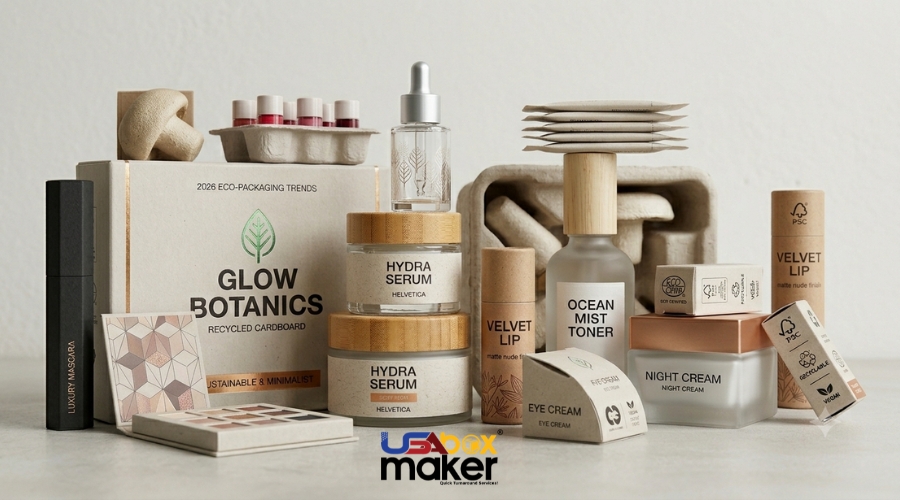
A small skincare brand kept everything simple. The formula was good, but the packaging was plain. On shelves and online, the product got ignored. Later, the brand changed only one thing: the box design. Nothing else changed. Still, customer attention and sales started to grow because packaging improved shelf visibility and perceived value.
Packaging now acts as the first trust signal in the US beauty market. People notice packaging before they notice the product. A good cosmetics packaging box is no longer a cover. It works as the first signal of quality, trust, and brand value.
Packaging Trends in 2026
The US beauty market is set by the DTC brands, TikTok unboxing and the competition for the premium shelf.
1. High-Function Sustainability & Mono-Materials
The US brand is transitioning to FSC paperboard, PCR plastics and refill systems. PCR PET is widely used in skincare bottles to reduce virgin plastic demand. This enables the brands to minimize their footprint while not sacrificing the safety of the products during transport.
Beauty box subscriptions featuring one product category are one of the trends. Single material makes recycling easy and reduces waste. Brands also develop stronger packaging that is still relatively light so that the product doesn’t need to be protected with extra material. FSC certification and PCR materials are becoming standard requirements for US beauty retailers. Some brands are responding, like Estée Lauder, which recently announced its goal to create packaging that is 100% reusable, recyclable or compostable, or Fenty Beauty, which already has their packaging made from 100% recycled material.
2. Minimal Design vs Bold Typography in Packaging
Minimal design is a cue to high-end skin care brands, and bold typography is a sign for impulse shoppers in retail and online environments. Beauty brands are clearly following two paths in their design in 2026. There are some brands that maintain their packaging in a very simple way. Others go all out with designs to make their products stand out immediately on the shelves and online stores.
Comparison Table
| Style | Look | Purpose | Best Use |
| Radical Minimalism | Clean, soft, simple design | Builds trust and a premium feel | Luxury skincare |
| Bold Typography | Strong fonts and loud visuals | Grabs attention fast | Youth and trend products |
Brands such as Glossier and The Ordinary rely on less design to gain consumer trust and create a pure brand identity, whereas brands that appeal to Gen Z have a go big or go home attitude with their typography.
3. Tactile and Sensory Unboxing Experiences
Beauty companies are now concentrating on the packaging appearance and the feel of the hands when customers pick up the package, open it and use it. The intention is to create more of an emotional response to unboxing. The modern Cosmetic Box is coated with soft-touch materials, embossed with texture and equipped with magnetic lids. This adds to the feeling that it’s more upscale and exciting. Unboxing content on TikTok and Instagram directly influences skincare purchase decisions
It’s all about the little things. Matte finish means that the box can be felt smooth. It is also of good quality. The product is protected by inner wraps and tissue layers. Simple inserts ensure proper storage and tidiness. These details not only enhance safety but also add to the aesthetics. There are also videos of the customers unboxing the products. Brands get organic reach for free of any media expense.
Magnet boxes and multi-layered packaging are key elements of brands such as Dior Beauty and Rare Beauty that emphasize the luxurious unboxing experience.
4. Smart and Connected Elements
The utility of packaging is increasing with technology. US beauty brands are using QR codes to reduce printed instructions and increase digital engagement . Brands like L’Oréal use QR codes to give ingredient transparency, tutorials, and virtual try-on experience .
This makes the product easy to understand and use. Customers do not need to search for information. This helps to establish trust and bring a smile to their faces. Some brands offer tracking and loyalty programs as well. This means that after the delivery, customers will be able to communicate. It aids in creating a long-term engagement.
5. Personalized and Limited Edition Packaging
Today’s customers are looking for personal and unique products. DTC beauty brands use personalization to increase repeat purchase rate. Brands like Function of Beauty and Curology use personalization to improve retention and drive repeat purchases
Packaging can be unique even on the smallest level, such as a change in packaging name, color, or even themed art. This helps make the product more emotional and helps the customers opt for the same instead of the regular one. Limited Edition Packaging also brings about urgency, prompting faster decision-making. It helps establish a stronger brand and customer loyalty over time. You can explore Best Perfume Packaging Boxes Design Ideas in our guide.
Conclusion
Packaging now defines how customers judge a beauty product before they try it. In the US market, design, material choice, and unboxing experience directly shape trust and buying decisions. Brands build conversions through clean design, intelligent features, and eco-friendly materials. Nowadays, packaging is no longer a protective function but also a brand strategy. Cosmetic packaging in USA 2026 has a sustainable focus that inspires trust and growth.
FAQs
Paperboard, PCR plastics, glass, aluminum and bioplastics.
They help to decrease the use of virgin plastic and promote sustainability targets.
It influences the first impression, trust, and buying decisions.
It helps to develop trust and appeals to green consumers.